Got a musty smell, a stain, or a feeling something's off? A room-by-room guide to where moisture hides, what to look for, and what to do when you find it.
12 areas of the house, each with an interactive floor plan and checklist
Beyond the inspection: how mold grows, the early signs, readings and tools, how mold tests work, what to do about a leak or growth, who to hire and what the repair involves, and how to keep moisture out for good
This guidebook is meant to explain each step of the process, in the order you would work through it. Here is what each part covers.
Part 1
How mold grows
The biology of mold, and how it develops in a home.
Everything else in the guidebook rests on this. Once you understand what mold needs and how it spreads, the rest of the process stops feeling like guesswork.
What mold is and when it becomes an issue
Why spores in the air are common
What that musty smell could be, and why a standard spore sample may miss it
The stages of development, illustrated step by step
What mold feeds on
Why it keeps coming back
Part 2
Readings and tools
Find the moisture you can't see.
These tools help you identify moisture problems inside your home, including ones you didn't know were happening. A stain shows where water has been. A reading shows whether it's still there.
HygrometerPen-style moisture meterThermal camera
How each tool works and what it is used for during an inspection
Part 3
Understanding mold tests
Know what a test can and can't tell you.
What each kind of test is for, and when to skip it.
Different kinds of mold tests, and what they can and can't tell you about the problem
Part 4
Spot the signs
The early clues, before anyone sees mold.
Learn what the common signs look like and what they point to.
Early signs of moisture intrusion, and how they can help you decide where to look next
Part 5
Room-by-room inspection
One area of the home at a time.
Interactive floor plans and checklists for 12 areas, from bathrooms to attics and crawlspaces.
12 areas: bathrooms, kitchen, basement, attic, laundry, bedrooms and living areas, windows, water heater closet, garage, exterior, crawlspace and HVAC
Where moisture collects in each area
What's safe to look at yourself
When to stop and call a professional
A checklist for every area, saved on your device
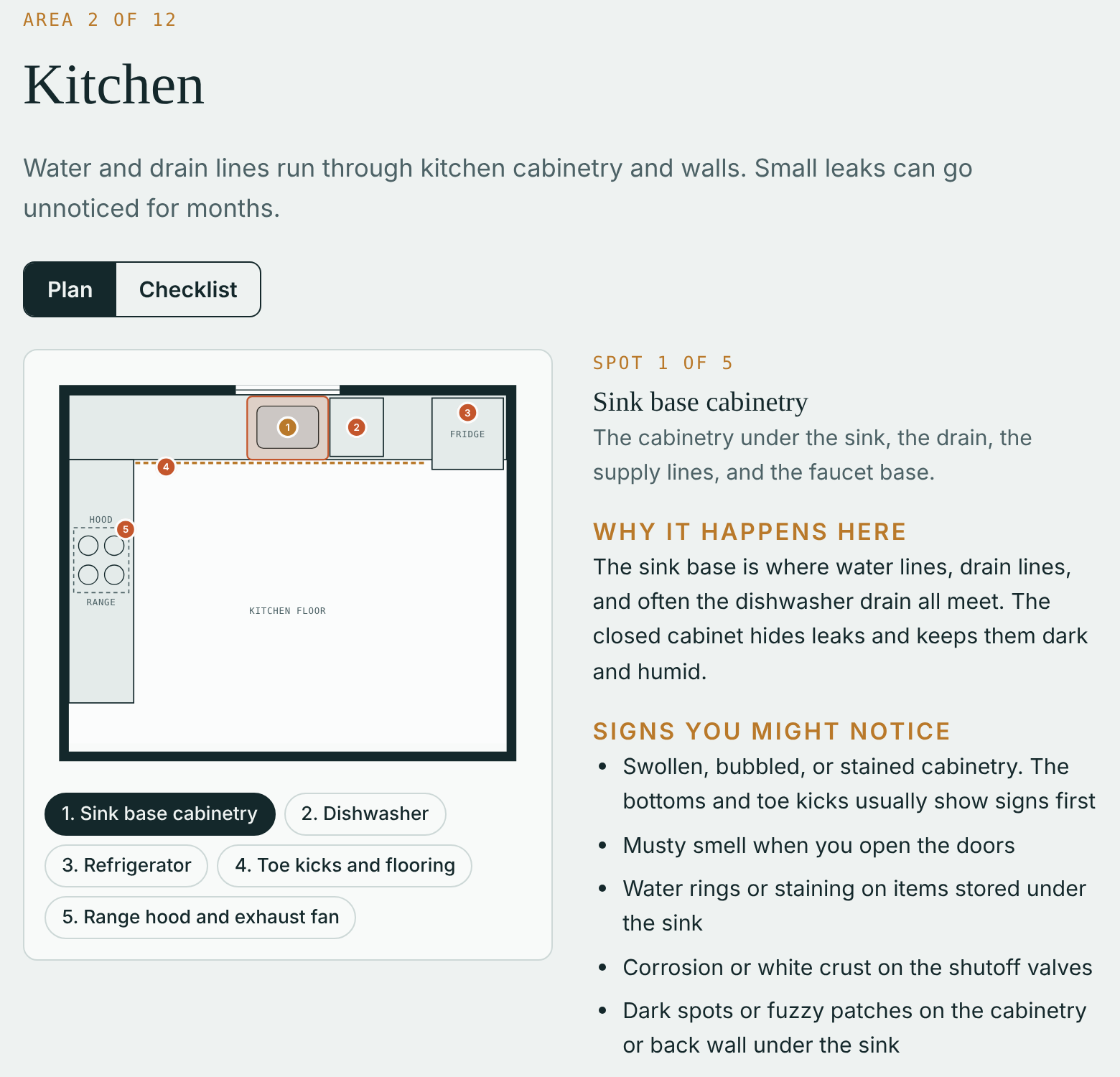
A look inside: every area has an interactive plan, an inspection routine and a checklist. This is the Kitchen.
Part 6
Have a leak?
What to do in the first day or two.
Found water where it shouldn't be? What to do right away, how clean, gray and black water differ and why the last two need professionals, and what to know about insurance.
What to do in the first day or two after finding a leak
Why the type of water matters, and what to know about insurance
Part 7
Found growth?
What mold looks like, and what to do about it.
You've found something that looks like mold. What it typically looks like on different building materials, what you can safely wipe off, and when to leave it for a professional to scope.
What mold typically looks like on building materials
The severity of the problem, and what the next steps should be
Part 8
Hiring and remediation
Two different jobs.
Who figures out what's wrong, who fixes it, and why they should be separate companies.
Best practices for hiring professionals in the mold industry, and how to avoid conflicts of interest
What remediation looks like from start to finish
Part 9
Keeping it from coming back
Moisture control, room by room.
Humidity and airflow habits, the tools that help, and what to do in each area.
Simple tools and habits that keep moisture from building up, room by room
From our partner HomeSAFE
Tests and tool kits
If you only want to sample or measure something, these two kits from our partner HomeSAFE are available on their own. The guidebook shows when and where to use them, and includes a 10% off code for both.
Mold test kit
For a suspicious spot you'd like a lab to examine. Swab it, mail it in, and receive a laboratory report identifying the mold detected in your sample. Identifies common indoor molds, including Aspergillus, Penicillium, and Stachybotrys.
2 microbial testing swabs
Lab report rates the amount of spores found and notes indicators of growth, like hyphae
HomeSAFE is our sampling partner, and we earn a commission on kits and tools ordered through our links. Swab areas you can safely reach. Lab results show only what was sampled and aren't a diagnosis of your home.
Who we are
Built by people who work in mold every day
We're professionals who work in the mold industry, and we built Mold HQ as an all-in-one educational guide based on our own experience.
We noticed that most sites promoting tests offered no explanation or guidance on how to use them or where to go from there. This guidebook covers the whole path: how mold grows, how to find the moisture behind it, what tests can and can't tell you, and what to do next, including when it's time to call a professional.
Mold is a normal part of the world around us. What matters is knowing where it shouldn't be growing, why, and what to do about it.
Ten dollars to know what to look for, and what to do about it
Every chapter, every checklist, and the seasonal routine that keeps the moisture out.